L-Threonate Magnesium: 7 Benefits You Might Not Know
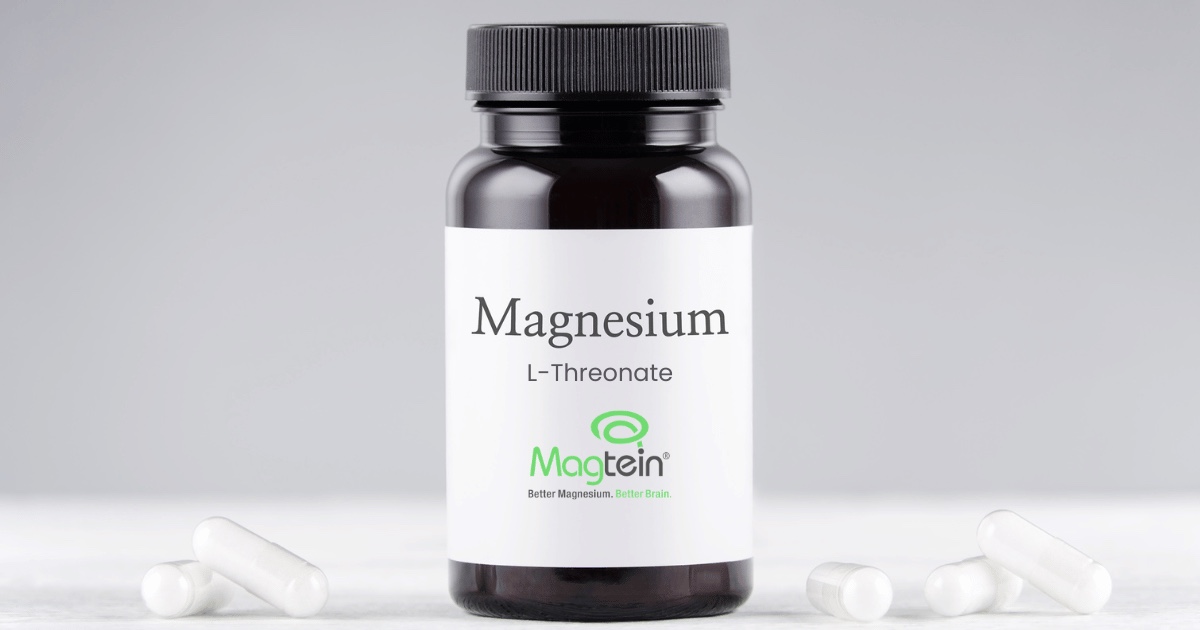
Magnesium L-threonate is the newest and probably the most talked-about form right now — especially due to its promise to benefit memory and cognitive function. In this article, I explain what makes it special, its proposed benefits, but also — and this is essential — where the evidence is still preliminary. Because scientific honesty is what distinguishes a serious recommendation from a fad.
What is Magnesium L-threonate?
Magnesium L-threonate is a compound formed by magnesium and threonine acid (a derivative of vitamin C). What distinguishes it from other forms is its ability, suggested in studies, to cross the blood-brain barrier — the "border" that protects the brain — more effectively and to increase magnesium levels in the cerebrospinal fluid. In other words: it was designed to reach the brain.
Magnesium is an essential mineral that participates in hundreds of enzymatic reactions in the body — the classic estimate points to more than 300, and more recent enzymatic databases raise that number to over 600. In the brain, magnesium plays a role in synaptic plasticity — the ability of connections between neurons to strengthen, which is fundamental to learning and memory.
NOTE ON SCIENTIFIC HONESTY
It's important to start here: much of the enthusiasm around L-threonate is based on animal studies and small human trials which, in several cases, were funded by the company that holds the patent for the form (Magtein®). The results are promising and biologically plausible, but they have not yet been robustly replicated in large, independent studies. It's a form to follow with interest — but without exaggeration.
The 7 proposed benefits of L-threonate
1. Memory and learning
This is the central and most studied benefit. By increasing brain magnesium, L-threonate can promote synaptic plasticity. Animal studies have shown improvements in memory; in humans, the data is still limited and preliminary, but points in the same direction.
2. Cognitive function and "mental clarity"
Some small trials suggest improvements in measures of cognition, especially in older adults with mild complaints. The magnitude of the effect and its real-world relevance still need confirmation in larger studies.
3. Support for brain aging
The hypothesis under investigation is that maintaining good brain magnesium levels can support brain health throughout aging. This is an active and exciting area of study — but, at this moment, it is a promise under investigation, not a certainty.
4. Sleep and relaxation
Like any well-absorbed form of magnesium, L-threonate can contribute to relaxation and better sleep, through the regulation of the nervous system. For this specific purpose, however, forms like glycinate have more evidence and a much lower cost.
5. Mood and anxiety
Magnesium plays a role in mood regulation and can modestly reduce anxiety in those with a deficiency. L-threonate shares this general benefit of magnesium, although there is no strong evidence that it is superior to other forms for this effect.
6. Correction of a magnesium deficiency
Like any magnesium supplement, it helps replenish the body's mineral levels. It should be noted that L-threonate has a relatively low percentage of elemental magnesium per gram, so it is not the most efficient (or economical) form to correct a systemic deficiency — for this, citrate or glycinate are more suitable.
7. Potential in neurological health
There is preliminary research exploring the role of brain magnesium in various neurological conditions. I emphasize "preliminary": these are promising lines of research, not proven applications. Any neurological issue should be evaluated by a doctor.
PHARMACIST'S ADVICE
L-threonate is interesting and worth following, but be an informed consumer: it's the most expensive form, and the specific evidence for the brain is still preliminary and often industry-funded. If your goal is general health or sleep, a more established and affordable form will give you better returns. If you want to try L-threonate for the cognitive component, do so with realistic expectations.
How to incorporate it into your routine
The doses studied often range around 1.5–2 g of L-threonate per day (which corresponds to a smaller amount of elemental magnesium), often divided and with one dose at night.
Respect the upper limit of 350 mg of elemental magnesium/day from supplements and consult a healthcare professional before starting — especially if you are taking medication or have any health conditions.
IMPORTANT WARNING
This article is for informational and educational purposes only. It does not replace professional medical or pharmaceutical advice. Always consult a healthcare professional before starting any supplementation, especially in cases of kidney disease, chronic medication, or pregnancy.
Do you want to delve deeper into this topic?
I wrote a complete guide — "Magnesium: Your Pharmacist's Guide" — where I individually delve into each of the main types of magnesium available on the market, as well as all relevant information.

Luis Coutinho
Pharmacist | IIN Health Coach.
Founder of Balance by LC — balancebylc.com
This article is for informational and educational purposes only. It does not replace professional pharmaceutical or medical advice.
Get scientific information about supplements every week
Subscribe and get for free: The 5 Essential Supplements I never skip.